2 Sept 2020 ● Liam Palmer, Registered Home Manager
How Technology Can Benefit Social Care Providers
In his latest podcast - Episode 12 - Liam Palmer talks with Rachael Crook. Rachael, is the CEO and co-founder of ‘Lifted’, who use innovative technology to provide integrated, community based care.
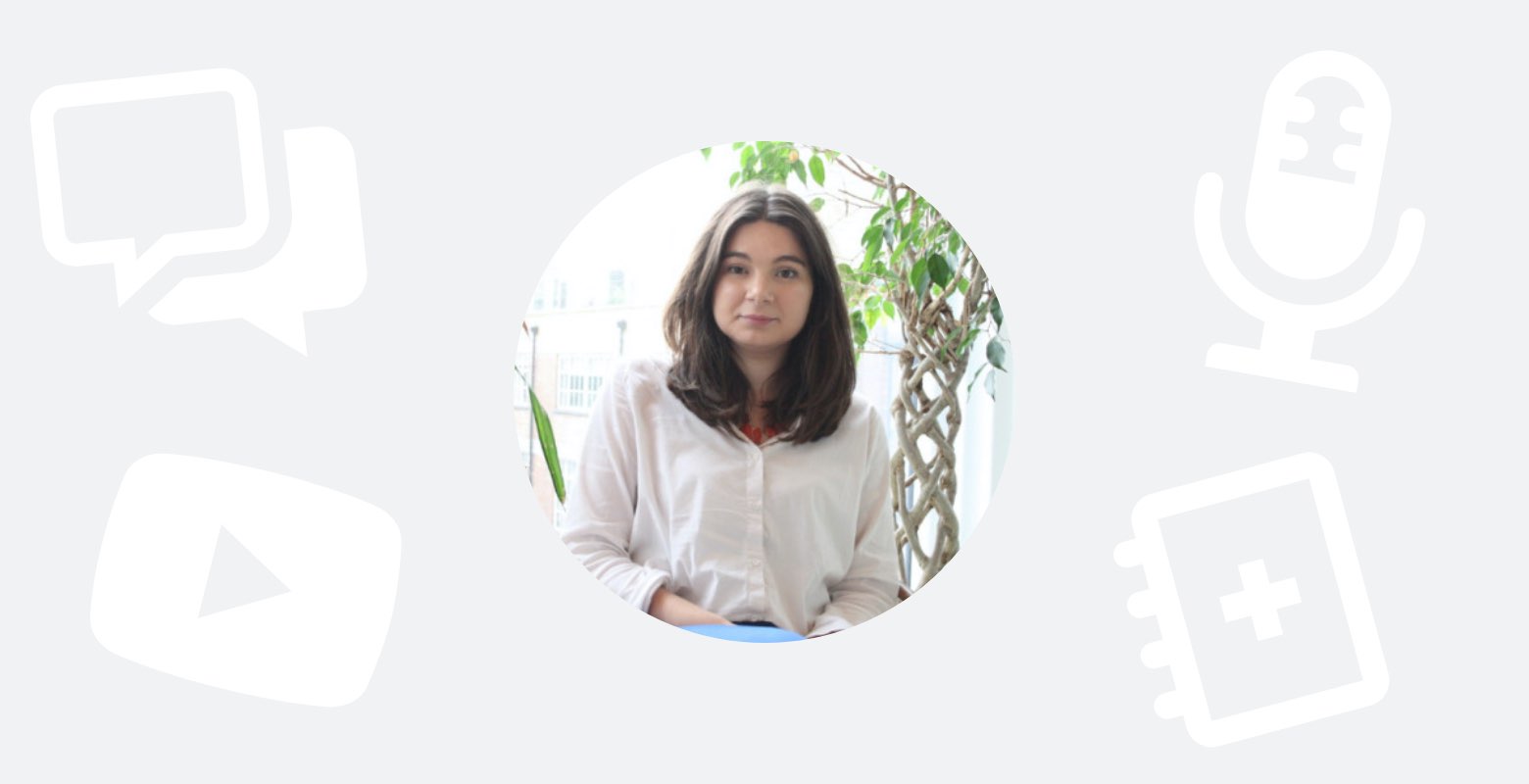 "Rachael Crook, CEO & Co-founder of Lifted"
Topics covered in this article
2.11 Learning To Navigate A Dementia Diagnosis
4.34 Noticing A Need, And Co-founding ‘Lifted’
7.52 Reimagining What Is Possible In The Care Sector
12.55 Combining Care With Technology
16.52 Advice For Those Looking To Start Their Own Business
20.00 Be Honest With Yourself And Keep A Balance
22.55 Break Your Tasks Into Manageable Portions
24.19 Get In Touch With ‘Lifted’
27.09 Why Technology Can Be A Friend To Social Care Providers
30.55 Ways In Which Technology Can Be Disempowering
32.32 Using Technology To Improve The Service
0:57 Introduction
Liam Palmer:
Rachael Crook is a social care entrepreneur.
As a care provider her business Lifted uses innovative technology to provide a more integrated offering for those who require community-based care and their families.
So, without any further ado, very warm welcome to you Rachael.
Rachael Crook:
Thanks so much Liam.
Lovely to be here.
Liam:
Yeah, absolute pleasure to have you on the podcast.
Obviously, we did record this about a week ago, and I was mortified that my technology let me down, or my lack of competence on technology let me down slightly.
So, thank you for being gracious to revisit this.
And I think we'll do it justice by having got to know each other a little bit more.
Rachael:
No problem at all, I hate it when stuff like that happens.
So, I felt for you.
So, don't worry. I'll try to remember the good things I said and forget the less so good things I said.
Liam:
Yeah brilliant, me too. Perfect, all right, thank you so much.
So, would you like to give us an intro then?
Obviously, you're the CEO of Lifted.
I know a bit about your story, but it's all about the listeners here.
So, would you like to tell us a bit more about Lifted and this business that you founded?
2.11 Learning To Navigate A Dementia Diagnosis
Rachael:
Absolutely.
So why don't I start by telling you a bit about why I decided to co-found Lifted.
So, when I was 24, I was busy completing a master's at university.
And my mum who was 56 at the time was diagnosed with frontal temporal dementia.
So, it was early onset dementia.
So I was in the position of having to think about care for a loved one 30 years younger than many people are when they're thinking about care.
And right from the beginning I really felt that there was very little support and guidance available for us as a family as we tried to traverse this new normal.
So, my mum is the person that I confided everything in.
And I know it sounds cliche, but really was my best friend.
And really before she was diagnosed, we started to see her behaviour change.
So, she started to struggle to understand things.
She started to lose her empathy, which was really difficult because empathy has been one of the things that really defined our relationship.
And that change and empathy is one of the things that made me notice that things weren't quite right.
But you just cross your fingers and you hope that she's having a bad day.
Liam:
Yeah, it must have been just such a shock.
Rachael:
Yeah, it was a huge shock.
And my grandma had vascular dementia, but my grandma had been in her eighties, and her dementia had been more conventional dementia for want of a better term, much more commonly her memory had changed.
But my mum's dementia was a real shock.
And I remember my dad telling us, and he said, "They've got the test results back and it's a form of dementia".
And everyone knows what that word means, and I think it's one of the things people are really frightened of.
But still the consequences of it in my life I really couldn't fathom at that point.
So for about three years, my family tried to do it by ourselves.
Pretty quickly my mum had to give up her old job.
She was a senior civil servant in the Scottish government.
So, she was a successful career woman.
I'd always looked up at her as someone that went off to work in suits, wafted Chanel No. 5 at me as walked out the room, and someone who helped me with my essays and was a very academic person, and quite an impatient person as well, much like me, much to my shame.
But actually, as her dementia started to take hold she really started to change.
And pretty quickly she wasn't able to express things very clearly.
She wasn't able to look after herself.
And so, we had to bring in a home care company.
And we brought in a company that was a very good company, but I still felt really frustrated by the experience.
And there were really three things that frustrated me.
4.34 Noticing A Need, And Co-founding ‘Lifted’
Rachael:
The first was the lack of transparency.
So, I was used to getting my phone out and being able to read about anything I wanted.
In particular I was used to getting my phone out and being able to read about my Uber driver who would take me home from a night out.
But I couldn't get my phone out read about the carer who was looking after my mum.
The carer would come and see my mum, and she would write notes, and those notes would stay in a file.
And that file to sit on the table in Edinburgh where I'm from, because I am Scottish, don't know if you can tell.
And I was in Oxford at the time.
And not being able to understand what was happening made an experience that was already disempowering even more disempowering.
And I felt very strongly that given how important my mum's care was to me, and to everyone who's being looked after, whose loved ones are losing somebody to dementia very slowly, it seemed to me that there was opportunity to have something that would give much more transparency.
The second thing that I felt very strongly about was that while the carers were good and kind people, it seemed to me that they were under trained and they were under supported, and frankly underpaid for the really important work they did.
And I felt strongly that given that they were doing something that was so valuable to me and my family, they deserve to be treated differently.
And the last thing that I felt frustrated by was the way that data was being collected and used.
Carers were seeing my mum every day.
They were seeing lots of really valuable information, but that information wasn't really going anywhere.
And so, I put those three things together, and fast forward a few years, and I founded Lifted with a couple of people.
I met some guys who'd already started working on a certain technology.
I got together with someone else, and we launched Lifted in April 2019.
6.08 What Is ‘Lifted’?
Rachael:
So Lifted is a tech enabled care provider.
We're a care start-up that combines the best of technology, the best of people, and filters that through our values to use technology to improve the quality of care in people's lives.
So, we're fully regulated domiciliary care business.
And we use tech to improve the quality of care and give more transparency to families.
We directly employ the carriers that we look after.
We're not an unregulated marketplace.
And we have built a care management platform, which is a community of three apps, an app for carers, an app for family members, and an app for us in the office that takes all that data and feeds it back to families.
So, families get instant updates on their phone when carers arrive and leave.
So, they can leave reviews in the app instantly.
They get all the care notes, and they get a set of data about how their loved one is feeling.
Carers obviously get a shortened version of the care plan through the app, which gives them much more detailed information about how someone is, but quite quickly.
And our admin system takes all that data and makes it so we can action it instantly.
So, if someone checks in around the corner it alerts us.
If someone doesn't take their medication it alerts us.
If someone misses a task in the care plan it alerts us.
And what that allows us to do is to upscale quality, but remotely by using technology.
And the second thing we do is that we care for carers.
And we are proud to be one of the 2% of home care providers that is registered as a living wage company.
We pay our carers the London living wage for hourly care.
And the third thing that we do is that we longer term want to be the definitive partner to people who are looking after a loved one.
So that's everything from care and advice and guidance, right the way through to using our technology to improve the quality of care, improve transparency in care.
That's the business that we founded so far.
7.52 Reimagining What Is Possible In The Care Sector
Liam:
Oh yeah, my background is more strongly in residential care, although I have a smattering of experience with the domiciliary care model.
But what I like about what you've talked about and the approach you're taking to meet this market need is you're not starting with being almost restrained by how people do it today.
And also when I recruited carers into residential care, in some cases the domiciliary work was seen as in some ways the poorer cousin of residential care, not because it wasn't valued, but because of journey times, and sometimes those organizations, as you alluded to earlier, weren't always particularly well run.
It was a really hard job for the carers traveling around.
So, it sounds refreshing that you've taken a new look at this and almost said, "Why can't we?".
Why can't we, as you said, carers have access to all the information they need.
Why can't families have access?
Why can't we treat carers with a higher level of dignity and respect, which is reflected in a better wage.
And I guess that's part of your... Is it social justice, or is that an interest you've got in that area?
Is that right?
Rachael:
It is about trying to reimagine what is possible in the care sector.
It's now showed us that home care is experiencing a huge increase in demand.
Supply is not keeping up with that demand.
And we have a huge shortage of people that want to come into the sector.
And we have to think of new ways to engage and inspire people, and to recognise them for the brilliant work that they do, and to treat them as the professionals they are in order to attract enough people to deliver the care that people deserve.
But even aside from the need for those workers, it's just a matter of moral principle to me that carers who do incredibly valuable work supporting people's loved ones in their most difficult moments deserve to be seen as what they are, as brilliant professionals that should be engaged, supported, encouraged, and rewarded properly.
And so caring for carers is as important as caring for families.
And we try to think of new ways to do that all the time.
So, during Coronavirus we doubled sick pay so that no one had to choose between putting someone's loved ones at risk and not being able to provide for their own families. We increased travel pay to account for the closing of the tubes.
But we also do all the little things.
It's not just about the money.
We created badges for our carers saying, "I'm a carer. Please give me space," for them to wear on the tube because they were struggling in London to have enough distance between people to socially distance appropriately.
And I meet all the carers that join us, and I thank them.
And I tell them that I know they have a choice, and I'm really grateful that they've chosen Lifted.
And we do what we can to make those carers feel engaged and excited by what we do.
But yeah, we are a values driven company, as lots of people are in the care sector.
But that valuing our workforce as importantly as our clients runs through everything we do.
So, it is really important to me.
I don't want to build a business, even if that business makes money, and even if that business changes the lives of families, if it doesn't also change the lives of carers, we wouldn't have achieved our mission.
Liam:
Yeah, I think on a personal professional level, I'm just so delighted to hear your stance on this.
For me, as a registered manager myself, my position was always the only reason I want my carers, as in the people who work in my service to leave, is because their circumstances have changed, and they no longer want to work in care.
What I always aspired to be was the best place to work within 50 miles, and to take such good care of my carers, of my care team, that they'd be happy and fulfilled doing the work they enjoy.
And they were just well supported, well-respected, well-regarded, they'd be listened to, they'd be asked their opinions on different things, because as you said there's a shortage of people.
We need to bring more people in.
And I think with people like yourself coming to the sector Rachael, we collectively need to raise the sense of esteem that the care professionals held in.
Because like you said, with experience with your family, it's something very, very personal to provide personal care, isn't it?
And I always say that it's when families have said, "Oh care's hard. It must be hard running a care home," and all of this stuff. And I say, "As far as I'm concerned, it's a privilege. It's a privilege to spend our working time with these people that we're fortunate enough to serve into, to provide support for".
12.55 Combining Care With Technology
Rachael:
I completely agree.
There is no greater privilege than being trusted with someone's loved ones, particularly when those loved ones need more support than they've needed before.
I think the thing that we do at Lifted is we try to think about how do we take those values and channel them through technology.
And I think people in the sector that talk about values, and that's brilliant.
And there are a lot of people in the sector that talk about tech, but quite often those two things don't interact.
So, you have people building software and you have people delivering care.
What Lifted is doing is saying, "Well let's put those together".
Like, What would it look like if a care company built its own tech? How would it think about the problem differently?
So we don't just use tech to digitize what goes on paper, although that's important.
We think about how do we use tech to reward and engage people differently.
How can we say thank you through the technology?
How can we identify the best performers and give them support that they need?
How can we make an app a super brain in your pocket, not just something that gets you care notes?
So, and some of that is a work in progress, because we're a relatively young business, but I do think there's something really special about delivering the care and delivering the technology.
And that's what we've chosen to do and do it all if you like.
But you're right as well Liam.
It is difficult.
And it is challenging, especially coming to care from an outside perspective.
But when you feel like you're changing peoples' lives, and when you can see the power of the technology in changing people's lives, it's pretty incredible.
Liam:
Yeah, yeah, completely. And I think that congruence, that integration as you said between values and tech is pretty unusual.
Angela Fletcher, who I interviewed before, she did the same thing with her service, where she actually integrated what she believed into all the practices.
And she got straight outstandings, and just created a remarkable business, at Happy Futures.
But I think it's taken these things seriously.
On the other end of the scale, I've worked for some really good social care organizations, some of which the values thing has been a bit of some tokenistic I suppose in some way.
So, there's this new edict, say thank you.
Oh, brilliant.
Right let's do that.
But quite honestly, I think that the people that we serve either as residents or work with as staff, they're not fooled.
Either we treat people with respect and kindness consistently, or we don't.
So, no one's really fooled by one-minute saying thank you, and then the next minute being told off too harshly.
So yeah, I think your approach, how can we support the staff better is just so refreshing.
So just yeah, all power to you.
Rachael:
I'm glad to hear it. So far, it's been going pretty well.
So, we got started looking after people in April last year.
We're still looking after some of those people.
So that's great, a year later.
And we've grown from a team with two people and a bit of a dream to a team of 50 people.
We have got exclusively five-star reviews, which we're really proud of.
And I was delighted that we won an award from the home care awards for the best new home care company in the country.
So that was very exciting as well.
So, it's been brilliant.
And because we're a business we've also managed to raise 3 million pounds in external investment as well to help us build that technology and really go for our ambition, is really transforming the care sector.
So that's pretty exciting.
Liam:
Yeah, very much so.
Yeah, it's a remarkable achievement.
Yeah, all right, perfect.
Okay, well thanks.
That's just a really insightful overview into the whys of the business and your approach, and I'm sure the listeners will find a great deal of value in that.
16.52 Advice For Those Looking To Start Their Own Business
Liam:
So moving on slightly, thinking about people that would like to maybe follow in your footsteps, or to innovate more using technology, thinking about existing domiciliary care providers, or people that want to start their own business in care in some form.
Could you give us any advice or a steer about how was it, because it sounds really simple?
You've done this and then suddenly you've got that, and then you've got investment, then you've recruited staff.
It all sounds quite almost seamless, but I'm guessing there was a lot of hard work and challenges behind all of that, right?
Rachael:
Yeah, absolutely. And I think it's really important to be honest about that, because I think there's this image of the start-up entrepreneur, where everything is easy and brilliant and you never have to try, and your product just takes off.
And my experience of running a start-up is it’s extremely hard work on lots of different levels.
It's hard launching a care business, even if it had no technology would be a really difficult task because it's such an important thing to get right.
And it really matters if you make a mistake because you're looking after people, particularly vulnerable people.
And trying to launch a tech business, there's just so much to learn all the time.
And yeah, it's really difficult.
And you constantly doubt yourself.
You think who am I to think I could make this change happen.
So I do think it's really important to do it with people.
So, I would say I'm the cofounder of Lifted.
I'm not the founder.
I didn't do it by myself.
There were three guys that had already started working on the technology.
They brought in some of the investment.
They've registered the company.
And I came in, looked at that technology, took it over, and became the CEO and then the cofounder and took it from there.
But if I hadn't had the support of those guys and the support now with my co-founder it would have been really difficult. You don't necessarily have to do it quite like that but find someone who has different skills to you.
So, I have lots of ideas, and lots of passion, and lots of energy.
I'm not so great at following through with things.
And I said at the beginning, sometimes I can be a bit impatient.
My cofounder's someone who's much more practical.
He's good at making sure that things happen.
And he's good at working with people in their own time to get there.
And that combination is really necessary.
And then we're lucky to be joined by a third person here who runs our technology, and we need those skills.
So, don't try to do it by yourself.
If you're not from the sector, then definitely bring in someone that has worked in the sector.
So, we have a brilliant registered manager, and it was a real search to find her, but I'm really excited by her expertise.
And she's really excited about doing something differently.
So, we combine what's worked for her before and what we do.
And we were also supported by Tim Dallinger, who I think is another person who's been on your podcast.
Liam:
Yeah, Tim's excellent. Yeah, superb.
Rachael:
Yeah, Tim's been absolutely brilliant.
From sitting with us the night before our CQC inspection to help us get it right, to we had a monthly audit from him.
We basically had a mock inspection every month all the way up in the run up to our first inspection.
And that was really, really vital.
And so, I think that's really important.
20.00 Be Honest With Yourself And Keep A Balance
Rachael:
And the other thing I think is just be honest with yourself about the resilience that it takes and don't feel bad if it's hard.
Because I think as you said, if it looks easy, sometimes you feel guilty when it's difficult.
But actually my experience is that starting in and running a businesses is difficult, but not beating yourself up about it when you find things difficult, because the thing about doing something like this is you learn how to do a new thing all the time, and you're never an expert in the thing you learn.
Because, so the first few months was all about learning how to create amazing care plans.
Then it was all about how to hire great carers.
Then it was all about how to nail the CQC inspection.
Then it became all about raising investment.
Now it's all about marketing.
So, it just changes all the time, what are the things you need to be great at.
And so, there's nothing like it to learn about.
It's amazing as a learning experience, but it is challenging, and people should be honest about that.
Liam:
Yeah. And certainly yeah, every time I talked to you, been fortunate to catch up with you, you've always got an evening of work ahead, so you've obviously burn the midnight oil to achieve what you do.
Rachael:
Yeah, I'm not great at work life balance as they say.
That's something I have noticed in care, is people do work very long hours because care never stops.
So, I try not to encourage that culture in my team, but it is difficult.
But yeah, I would love to say Liam that you just catch me on the long days, but psych.
Liam:
Yeah, yeah yeah.
Always at five right.
Computer off.
Rachael:
Yeah exactly.
But yeah, sometimes if you love what you do, then sometimes it doesn't feel like work, but sometimes it does.
So, it just depends.
Liam:
Yeah. I don't run a business, but I've been working seven days for about five years now with writing, and podcasts, and other bits and pieces in care.
And the way I see it is, I'm not intending to do that forever.
Some of its pleasure, and some of it's just momentum.
And the way I see it is there's a certain standard required for what I'm working on.
So, I need to get what I'm doing up to that standard.
And then there's this certain tipping point where it will require maintenance, but not quite so much push.
And I would have thought with the launching a new business and getting funding is you've got to push it really hard, haven't you, to get results, to maintain stability, to win and retain the trust of the people you're working with.
Fingers crossed or God-willing et cetera, a few years down the line everything could be very well established.
You've got more managers in place, and you might not have to work every evening, perhaps.
So I don't know.
22.55 Break Your Tasks Into Manageable Portions
Rachael:
You remind me of a really good piece of advice I was given in my very first job, which was a Mini in the garage is worth more than a Ferrari in your head.
Liam:
Brilliant.
Rachael:
It's really good, isn't it?
I really like it.
I've had the same thing written about me so many times, which is stop trying to make it perfect, iterate, get the first draft done, then make it a bit better, then make it a bit better, then make it a bit better.
Actually, that's probably my advice in terms of when you asked me before, what would I say in addition to the things I've said.
I think the other thing I would say is just start with spending a lot of time thinking I can't do it, or it's not perfect, or I don't know what to do.
But just start, just do that first little thing, and the next little thing, and the next little thing.
And then you'll notice over time that somehow, you've done the thing you didn't think you could do.
My mum used to say to me, and it was funny because she said it to me and I couldn't work out if it was because she had dementia or not, but then I Googled it and it is a quote.
Liam:
Or she was just being genius.
Yeah, got it.
Rachael:
And it is actually a thing, which is,
"Do it like you would eat an elephant".
And I was like, "Sorry?" And she was like,
"Well first you'd eat the tusks, then you would eat the trunk".
And I was like, "I'm not sure anybody should be eating elephants".
Liam:
Yeah, that's wrong.
Rachael:
But she was absolutely right.
She's like, "Break the task into manageable bits, and just do that little bit, but give it your all while you do that little bit, and then move on to the next bit".
And I think that's advice that I've tried to use, and I think is really helpful.
24.19 Get In Touch With ‘Lifted’
Liam:
Yeah, perfect. Thank you.
Okay, I want to ask you a broad question about technology for the listeners, but before that is there anything else that you want to add for the listeners about Lifted, about what you're doing, about what's important, about what you've learned?
Is there anything else that you want to add to the conversation before I come up with this final-ish question?
Rachael:
Yeah, I think just to say Lifted is a new care company.
So, we've been around for 14 months.
And I've learned a huge amount, but I'm really keen to learn more.
And I'm really keen to work with people that share our vision, that share our passion.
We are just about to do a whole bunch of new tech development thinking about what are the ways that we can really help families share in the joy of care, not just in the mechanics, but in the joy that we think carers bring.
And we're thinking about that.
And also, how do we integrate with connected devices, and how do we use AI, artificial intelligence, to look at the data that we're collecting and make it more useful for people.
So there's a huge, huge need for innovation in all the services that support families.
And if you're someone that shares our values, shares our commitments to supporting carers, shares our belief that care can and should be better for families and bring them joy, then I'd love to hear from you or to work with you.
And I'd love you to keep up to date with what we're doing.
You can go to our website, which is liftedcare.com.
And just reach out and say hi.
I'd love to hear from you, and hear what you think, and get your thoughts.
Lifted is growing quickly and we're keen to attract more people that would like to be part of what we think we're doing, which is building the future of care at home.
So yeah, I'm really grateful to everyone that's helped us so far, and really keen to keep learning from other people.
Liam:
Thanks Rachael.
And I think just for the listeners sake, I have a general principle that whilst I don't directly promote anybody who comes on board, I think it's important to remember that the topic of this podcast is to meet the leaders and innovators.
So that's why we've gone into a bit more detail about your offering and what's unique about it.
Because I just want to let our listeners know what's happening out there in the marketplace, and how new are coming into the sector and doing different things, innovative things.
The technology capability is there already.
It's just a case of different people coming in and actually doing it.
So that's why I wanted to get a bit more detail about what you're doing.
And I'm hoping that will inspire others out there to follow you in different ways about embracing tech.
27.09 Why Technology Can Be A Friend To Social Care Providers
Liam:
And I think that leads fairly neatly into my final question Rachael then.
A general question then about social care for those who are not tech savvy, the domiciliary care providers, could be residential providers, for those who have got a comfort with familiar pads, and forms, and paper care plans and stuff like that, could you articulate why technology can be a friend to social care providers?
Rachael:
Yeah, really happy to.
I think there's three things to say on that, three reasons I can think of off the top of my head, and maybe more will come to me while I'm speaking.
The first is that it frees up time in order for you to spend more time with people.
So, if you use technology you can just simply complete those answers much quicker.
So, we collect a set of health data about the peo